The Case of TLV
Sleepless Tel Aviv -Towards Positive Angiogenesis
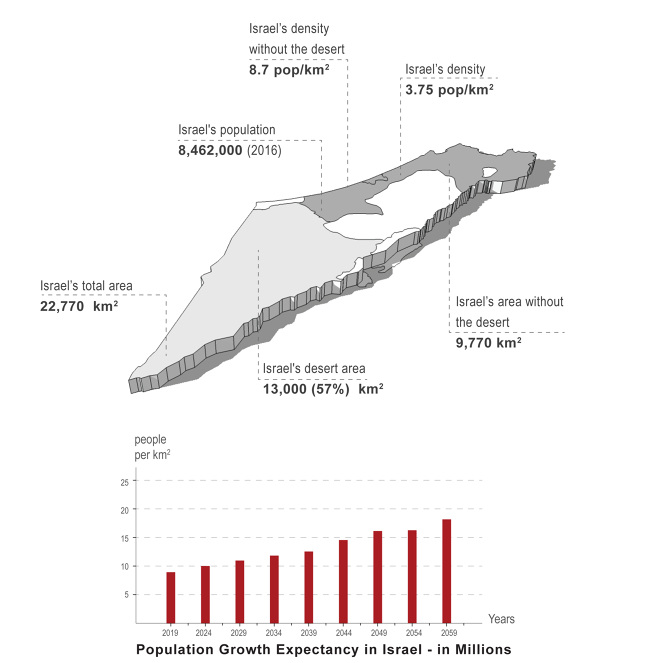
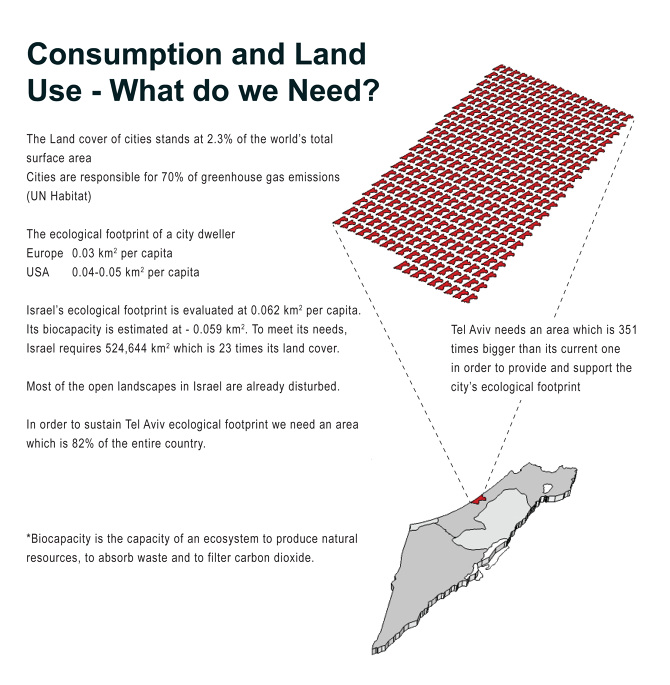
One of the greatest threats to the nature-human ecosystem balance has to do with overpopulation, a point echoed by Malthus(10) , who claimed that when population growth outgrows its resources, we reach a 'Point of Crisis'. If we associate this theory with Israel’s urban population (92%), it becomes necessary to think of ways of maintaining balance within our urban ecosystem in order to prevent the 'point of collapse'.
This issue becomes increasingly urgent in the case of Tel-Aviv, where market forces have created a massive change in the structure of the city, with little research or understanding as to how this will affect the city social and ecological services.
Over the past decade, the city has evolved into a magnet for different communities, especially young creatives, causing a rise in growth and a change in the cities demographic structure. As a result, the local housing market has not been able to keep up with increasing demand. Various urban solutions are evolving in order to provide affordable and appropriate housing solutions, but these solutions often lack the necessary support and infrastructure, and frequently bring forth questionable living standards. One can’t help but wonder, how can we provide a faster, more flexible and adaptable planning process to our fast pace, ever changing urban landscape?
The Hidden Density
According to Israel’s Central Bureau of Statistics, Israel is one of the densest countries in the world. Compared to other countries in the OECD, Israel is in third place (375.9 pop. per km2), behind Korea (507 pop. per km2 ) and the Netherlands (499.1 pop. per km2)(11). The greatest population density in Israel is in Metropolitan Tel Aviv, standing at 2,449.3 pop. per km2, while in the city of Tel Aviv it reaches 8,229 pop. per km2. However, statistically, Tel Aviv is still not considered the densest city in Israel. In nearby Bnei Brak, the population density reaches 24,280 pop. per km2; for the sake of comparison, the population density of Manhattan is 27,812.2 pop. per km2. If so, why is Tel Aviv characterized by symptoms typical of cities with much higher population density than that recorded by the Central Bureau of Statistics?
In order to analyze this problem, we must understand processes of immigration in Israel and the unique characteristics of Tel Aviv.
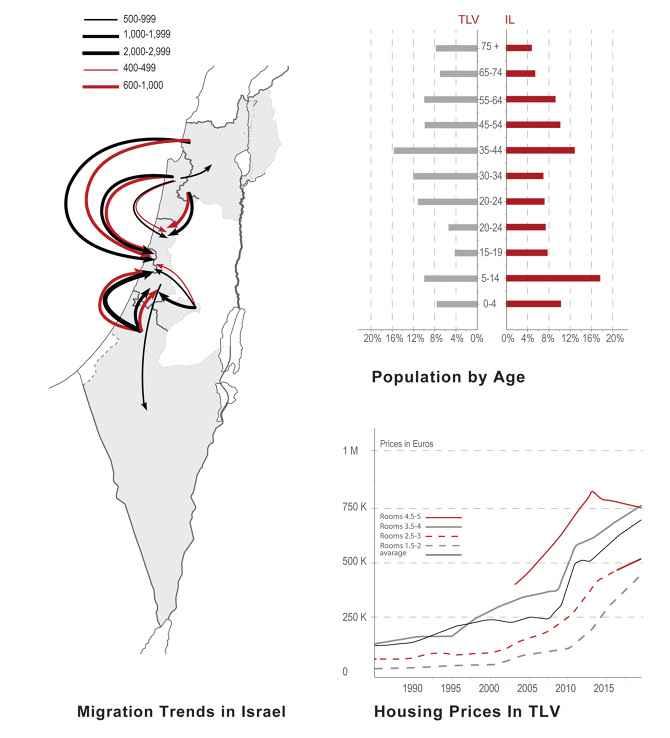
Tel Aviv is a focus of immigration due to its great and diverse array of opportunities for employment, culture and academia, and by virtue of its pluralistic atmosphere that facilitates development of diverse populations. Tel Aviv attracts populations with polarized socio-economic backgrounds; on the one hand, young adults searching for diversity in the job market, students, and the established elite, and on the other hand, migrant workers, and minority populations to which the city offers diverse work opportunities and allows them to establish themselves.
Based on the data showing that Tel Aviv is not the densest city, while its housing shortage is the most severe in Israel, the assumption is that since Tel Aviv became a multidisciplinary focus of attraction it absorbs a large number of residents who are not formally registered in the population registry and therefore are not part of the statistics. These residents settle temporarily in Tel Aviv for a period of time lasting from months to years, in order to benefit from, and use, the many services the city offers.
This ‘hidden immigration’ creates an increase in demand for housing solutions and urban services. Besides the drastic rise in prices following this high demand, the process leads to instability of existing urban systems due to the uncontrolled and ever-growing consumer base. The inability to predict and plan for the number of users leads to a situation in which some of the systems are likely to collapse and thus bring Tel Aviv to the point of crisis. The implications of this hidden immigration and sharp increase in prices create social, economic and physical problems that present a serious challenge for the city’s decision makers.
The State Comptroller’s report for 2013(12) deals with data relating to illegal migrant workers. According to the Population, Immigration and Border Authority, the number of legal migrant works (not defined as residents) is approximately 80,000, while the number of illegal workers is 15,000. Most of them live in south Tel Aviv. In his report, the Comptroller highlights the problems arising from the heightened and uncontrolled crowding:
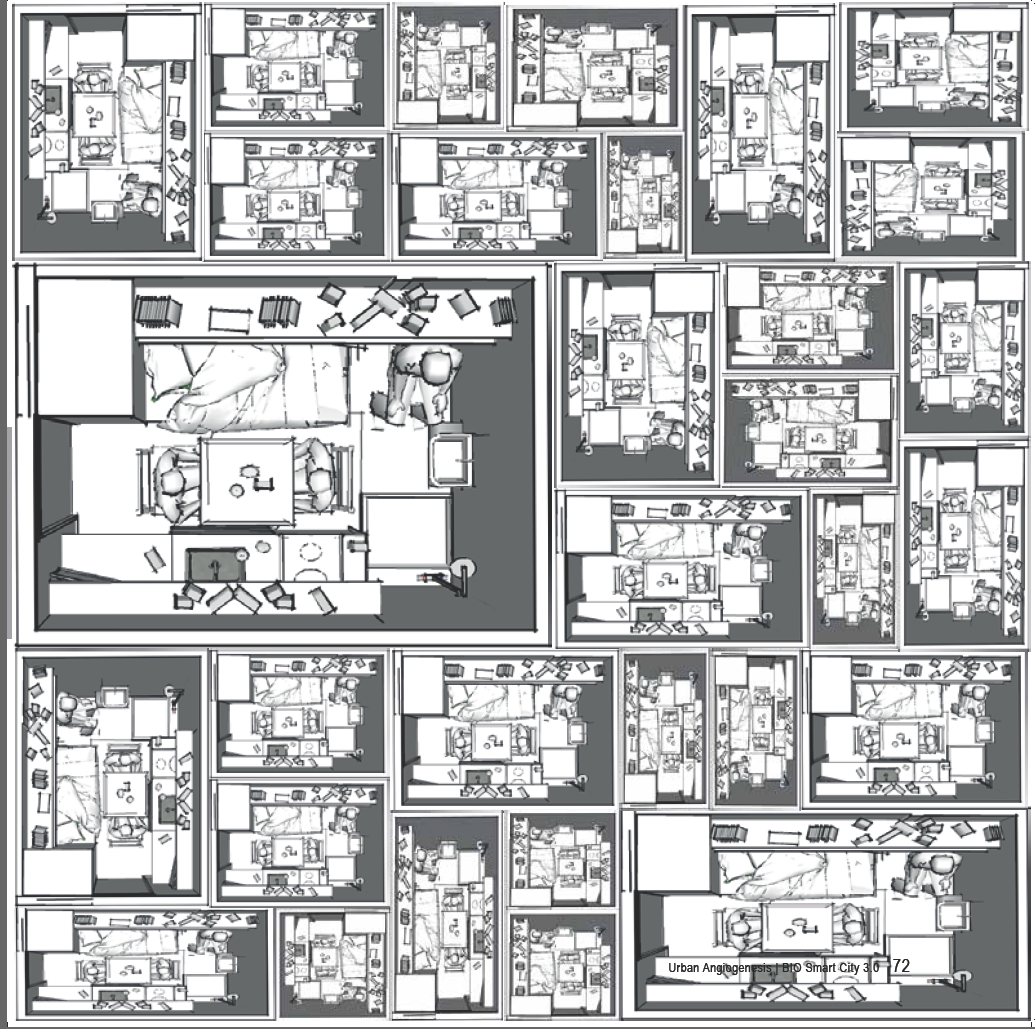
“The noticeable population growth in Tel Aviv’s southern neighborhoods increases the demand for rental apartments. Some of this demand has been met via two approaches: subdivision of apartments into smaller apartments and residence of many foreigners in an apartment that was planned for fewer tenants. According to professional authorities, the physical conditions in these neighborhoods, including the subdivided apartments, private connections to gas facilities and dangerous connections to the electricity grid, lead to safety risks and sometimes even to actual life-threatening situations. This report draws attention to one of the most prominent examples of the impact of crowding, both documented and undocumented, and the direct consequences it causes to urban and physical infrastructures and to residents’ well-being.”(13)
StartUp TLV
The city is a suprasystem encompassing a complex and dynamic array of subsystems, while at the same time it is also a component in a larger interconnected system at the regional and national level. The city comprises both physical and natural systems that are mutually dependent and linked via complex and variable interactions. The human system that populates the city is connected in the Information Age by ordinary devices embedded with electronics and by various platforms to the 'Internet of Things', which constitute a significant portion of Big Data. Every individual in the network consumes and transfers information directly to the systems associated with it. These systems are part of a large, infinite network of accumulating information; due to the connectivity and availability of these data, it is possible to conduct data mining, or to store, exchange and process information for problem solving.
The idea of the 'Smart City' evolved due to the availability of Big Data, leading to the development of computing systems for enhancing the tools required for data processing. Advancement of the idea was based on understanding the great potential embodied in Big Data as a smart management tool that responds to dynamic systems in real time. These systems, thanks to their technological sophistication, are able to analyze vast amounts of random, accumulated data and within a short time produce focused information to answer specific issues.
’Smart City' was developed by the technology-business sector that understood the commercial potential embodied by new technological developments. This stage was defined as Smart City 1.0, the first of three distinct stages. Smart City 2.0 was initiated later by the local municipalities. The initiative arose from the identification of a need to respond to variable urban situations that can be monitored, allowing provision of an appropriate solution to improve the urban systems with an emphasis on the physical infrastructure. A primary characteristic of these two stages is a central control system in which technological parameters related to water, electricity, transportation and sanitation are processed in real time, or else the information is used to provide emergency services and to locate and prevent crime.
The 1.0 and 2.0 stages are practical and functional at the most basic level, relying on technology and the top-down approach. Smart City 3.0 enhances the hidden potential by harnessing technology and information for the residents’ benefit by integrating city dwellers and the information that they produce and consume as an integral part of city management. Smart City 3.0 integrates top-down policy with a bottom-up approach and operates as a democratic, holistic system. The strength of strategies built upon bottom-up information transfer lies in being based on the various fundamental parts of the system, which provide a broader picture that represents many factors of influence. Fulfilling the potential of Smart City 3.0 requires synergy between city management and residents, the end users, who must comply with a high level of accessibility to the range of network platforms, including social applications and networks, file-sharing interfaces, and online forums.
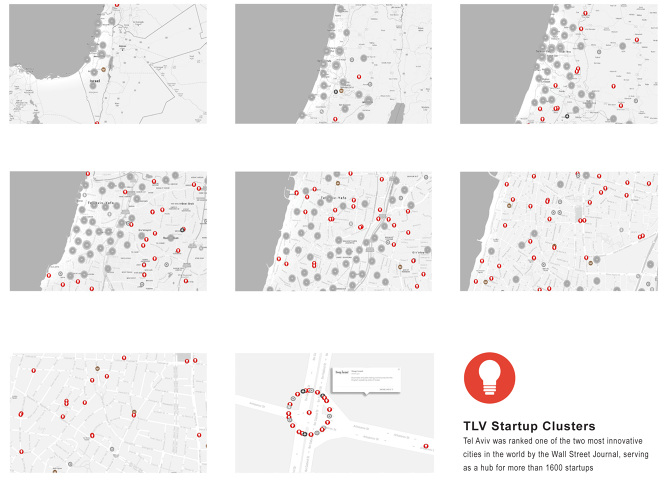
Tel Aviv is the perfect candidate for the implementation of Smart City 3.0 tools and technology. Known as Israel’s startup capital, Tel Aviv today is ranked as one of the most innovative cities worldwide. The city is undergoing a digital revolution through the implementation of innovative systems that enhance the well-being of city dwellers.
The profile of Tel Aviv's young professional creative class generates an opportunity to establish an integrated system of the formal top down with the informal strength of collective wisdom. These Generations Y & Z, characterized as Tech-Friendly and very active on social media websites, can play an important role as a leading force in the implementation of the BIO Smart City system.
By extracting the required information from the data cloud it is possible to produce a tool for early diagnosis and accordingly, a device for targeted treatment of urban problems, both physical and social, in similar fashion to the healing process offered by nanotechnologies. The challenge is to embrace these new emerging solutions by innovatively applying and cross-referencing accumulated data, and by optimizing tools for the creation of a more balanced urban ecosystem.


(10) Malthus TR., (1798). An Essay on the Principle of Population. London: J. Johnson, in St. Paul's Church-yard.
(11) Data extracted on 15 May 2016 from OECD.Stat: https://stats.oecd.org/Index.aspx?DataSetCode=REG_DEMO_TL2
(12) Government services and information, Data on foreign residents in Israel 1/2016. Retrieved 15 May 2016 from: https://www.gov.il/BlobFolder/reports/foreign_workers_report_q1_2016/he/Q1_2016_0.pdf
(13) THE OMBUDSMAN Annual Reports 63 for 2013, The State Comptroller in Israel, Retrieved 15 May 2016-Statistics and Data - Israel’s central bureau of statistics